

- Call Now
- +91 9768454139
- +91 9322945984
- Email Id.
- ablaw2025@gmail.com
Practice Area
NDPS Law
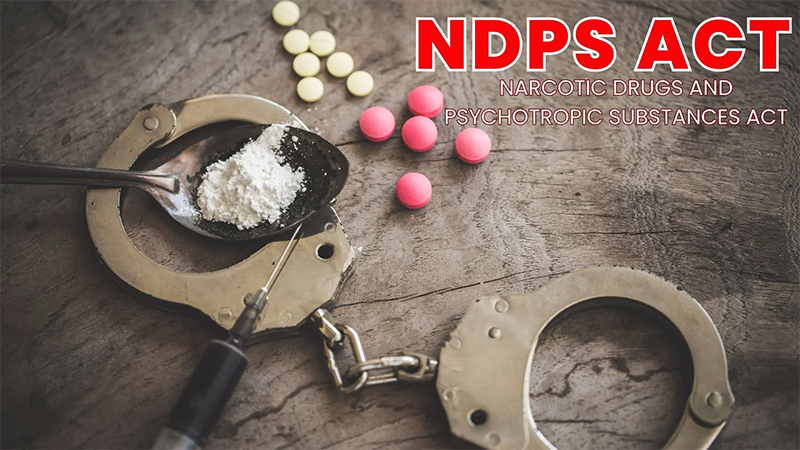
The Narcotic Drugs and Psychotropic Substances Act (NDPS Act) is a comprehensive statute designed to prevent and control illicit production, trafficking, sale, and consumption of narcotic drugs and psychotropic substances. It criminalizes unauthorised cultivation, manufacture, possession, transportation and distribution of controlled substances while balancing supply reduction measures with limited provisions for treatment and rehabilitation of addicts. The Act aims to protect public health and social order by imposing strict penalties and establishing procedures for investigation, search, seizure and trial.
Key features
- Offences and penalties: The Act defines a range of offences with penalties that vary by the type and quantity of the controlled substance, ranging from fines and imprisonment to life sentences and the death penalty for the gravest trafficking crimes.
- Classification and schedules: Narcotics and psychotropic substances are listed in schedules; legal consequences depend on these classifications and prescribed thresholds.
- Possession and consumption: Possession and consumption are criminalized, though courts have at times recognized medical necessity and addiction treatment as mitigating considerations.
- Search, seizure and investigation: Special procedural safeguards are provided, but authorities have broad powers to search premises, seize property and detain suspects subject to judicial oversight.
- Presumptions: The Act contains statutory presumptions (e.g., possession, knowledge) which, in practice, shift some evidential burden onto the accused and significantly affect defence strategy.
- Treatment and rehabilitation: The law recognizes the need for treatment and includes mechanisms for rehabilitation and diversion in limited cases.
Practical considerations
NDPS cases involve complex forensic, investigative and procedural issues. Defendants and legal counsel must pay careful attention to chain-of-custody for seized substances, legality of searches and seizures, compliance with statutory procedures, classification of seized material, and calculation of statutory thresholds. Given strict punishments and procedural presumptions, legal strategy typically focuses on procedural compliance by investigating agencies, scientific identification of substances, challenging possession and knowledge presumptions, and highlighting mitigating circumstances such as addiction or absence of mens rea.
Practice Area
- Civil Lawyer
- Criminal Lawyer
- Child Custody Lawyer
- Corporate Lawyer
- Legal Documentation
- DEBT Recovery Tribunal Lawyer
- Property Lawyer
- Bombay High Court Lawyer
- CAT Services Matters Lawyer
- RERA Matters Lawyer
- Consumer Disputes Lawyer
- Cyber Law Cases Lawyer
- Court Marriage Registration
- Divorce Lawyer
- Domestic Violence Lawyer
- Matrimonial Lawyer
- Family Dispute Lawyer
- Supreme Court Lawyer
- Bail Matters Lawyer
- Cheque Bounce Lawyer
- Legal Drafting & Documentation
- NDPS Law
- Anticipatory Bail Law
- Succession Law
- Legal Heirship Law
- Letter of Administration Law
- Central Administrative Tribunal Matters
- Maharashtra Administrative Tribunal Matters
- Revenue Tribunal Matters
- School Tribunal Matters
- Charity Commission Matters
- Land Acquisition Law
- Municipal Corporation Law
- Muslim Marriage Divorce Inheritance Law
- Sexual Harassment at Workplace (POSH)
- Labour & Employment
- Estate Planning, Wills, Trusts & Personal Law
- Litigation, Arbitration and Dispute Resolution